






'Plant-based' replaces 'v-words' to appeal to carnivores
As companies try to get Americans to eat fewer animal products, “plant-based” is replacing “vegan” and “vegetarian” because of the unappetizing and polarizing associations the v-words might have.
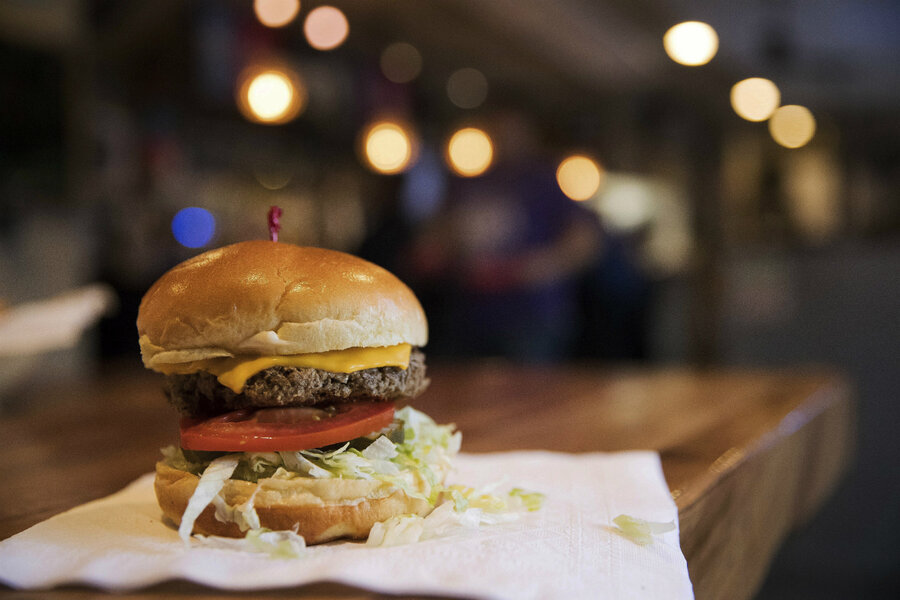
It's not vegan, it's "plant-based." So will carnivores bite?
As companies try to cater to Americans' interest in lighter eating, the term "plant-based" is replacing "vegan" and "vegetarian" on some foods. The worry is that the v-words might have unappetizing or polarizing associations.
Impossible Foods, which makes a meatless patty that's supposed to taste like meat, even warns restaurants not to use those words when describing its burger on menus.
"For many people, their notion of a vegan is someone who's wagging a finger at them if they eat any animal products. I'm vegan. But for a lot of people that term – it's almost like a cult," says Pat Brown, CEO of Impossible Foods, whose burger is served in about 3,000 locations including White Castle.
The trendier sounding "plant-based" may appeal to a broader market, since "vegan" or "vegetarian" could alienate those who don't adhere strictly to those diets. "Plant-based" may also distance products from a perception of vegan and vegetarian food as bland.
Since "vegan" is used to convey what's not in a product, it can be associated with deprivation, says Michele Simon, executive director of the Plant Based Food Association, an industry group founded in 2016. "Plant-based," she says, has a more positive connotation because it explains what is in a food.
"I think there's room in the market for both terms," says Ms. Simon, who notes that some companies still proudly use "vegan."
The terms vegan, vegetarian, and plant-based are not specifically regulated. But vegetarian typically means meatless, while vegan means no animal ingredients at all, including milk or eggs.
When referring to a specific food or product, "plant-based" usually means the stricter vegan definition, though that may not always be clear. When referring to broader eating habits, it usually means a diet focused on vegetables but may also include meat or fish. That lack of clarity is why the Plant-Based Foods Association plans to develop a definition for the term.
Beyond Meat, another meatless patty maker, also avoids the words vegan or vegetarian in hopes of winning over carnivores. It pushes to have its products sold in the meat sections of supermarkets, rather than in what the company calls the "penalty box" of the frozen vegetarian foods section.
And in the coming weeks, a new liquid egg substitute will arrive in grocery stores with the bottle saying it is "made from plants." Just Egg, which will be sold alongside cartons of eggs, will not have the word "vegan" on it.
"[Plant-based] has become more associated with foods that actually taste good," says Josh Tetrick, CEO of Just.
MorningStar Farms, a more established vegetarian brand, continues to use "veggie" and "vegan" because those terms are understood by most people and help prevent confusion about whether ingredients such as eggs are used, says Dick Podiak, a marketing executive at Kellogg, which owns the brand.
But MorningStar Farms is also increasingly incorporating the term "plant-based" into its marketing. Mr. Podiak says the company wants to communicate that its products fit into the "plant-based" lifestyles people may read about in magazines or hear about from dietitians.
Nik Contis of the branding agency PS212 says the term "plant-based" might be more broadly appealing, but that some may see it as just a new term for an old concept.
"If there's a person who is never going to eat a 'veggie' burger and you put a 'plant-based' burger in front of them, I don't think they're all of a sudden going to say, 'Oh I'm going to eat that,' " he said.
This article was reported by The Associated Press.
 From the MagazineWhy Howard Zinn became a ‘people’s historian’
 How a British bookstore has extended its shelf life
 From the MagazineAt the bookend of summer, here are September’s best reads
 From the MagazineThis saxophonist’s jazz offers a call and response for Africa
 From the MagazineIn Canada, a storied travel writer finds a kind of homecoming
 From the MagazineA writer chases butterflies, collects life lessons
 Recounting cockpit struggle on FlyDubai flight, Israeli passengers return home
 Trump is moving fast and breaking things. He could pay in November.
 How colleges are responding to Trump administration’s ‘call to action’
 As MAGA turns toward ‘heritage Americans,’ Ramaswamy hopes it doesn’t leave him out
 Hoping to push the US away, Iran’s strategy is to go on the offensive
 The US wants a Ukraine peace deal. Here’s why Russia isn’t biting.