






Scandinavia's U-turn on book reading
The former pioneers of screen-mediated learning in schools shift back to books to better cultivate purpose and judgment in young people.

Amid a spate of cellphone and social media bans for young people around the world, there’s a parallel, quieter shift taking place in education. It is away from the ubiquity of digital technology and back to the analog tools of paper, pen, and pencils.
And, in an interesting twist, this change is being led by the Scandinavian nations that pioneered the shift to ed tech learning more than a decade ago. Today, they are grappling with restoring – or, rather, redefining – what contributes to meaningful and enduring education.
In 2009, Sweden – home to tech giants Spotify and Klarna, among others – swapped out printed school textbooks for computers and tablets. In 2023, it announced a €104 million ($122 million) plan to bring back book-based learning, especially in the early grades. Finland began a similar reversal in 2024. And so has Norway which, starting in 2016, issued an iPad to every 5-year-old starting school. Now, its government, teachers, and librarians are going all out to boost reading – through library-based, youth-friendly activities and community reading sessions.
Behind these shifts is public concern over declining literacy and reading comprehension. But the change also points to a broader embrace of screen- and tech-free learning as a means to support less distraction, active engagement, and deeper learning among young people.
“Progress sometimes means knowing when you’ve taken a wrong turn, so you can double back and undo the mistake,” observed a Swedish writer on After Babel, a Substack newsletter launched by New York University professor Jonathan Haidt. Dr. Haidt’s extensive research on the effects of online technology and social media on children and teens has spawned growing discussions about how best to balance the use of tech in the service of education.
Ed tech, according to Australian education specialist Jared Cooney Horvath, has grown “from a niche supplement into a $400 billion juggernaut woven into nearly every corner of schooling.” But scale doesn’t necessarily equal impact. Screen reading, by its very nature, Dr. Horvath wrote in The Dispatch last December, favors “shallow skimming – glancing, scrolling, and extracting instead of truly learning.” Other researchers point out that screen-based tools substitute passive engagement and novelty for the more challenging and time-consuming consideration of new concepts.
Deepen your worldview
with Monitor Highlights.
Politics with respect
Get political stories with respectful analysis.
There‘s a world of new ideas in every
Books newsletter.
There‘s more to life, enrich yours with
Culture & Learning weekly.
Follow humanity‘s discoveries with
Science & Nature stories in your inbox.
Gain a spiritual perspective
from the stories in your inbox.
Want to understand the deeper impact of critical events? Learn the Monitor‘s insight.
Already a subscriber? Log in to hide ads.
For one longtime high school humanities teacher, the increasing intertwining of technology and AI in learning “has done education a favor it didn’t ask for” – by spurring a needed and timely reconsideration.
For too long, education has primarily been viewed as a means “to succeed, to be useful, to secure a future,” observed Aran Levasseur in the online magazine of the University of California, Berkeley-based Greater Good Science Center this week. The present moment, he indicated, offers an opportunity to “reimagine [education] as the cultivation of judgment, purpose, and the capacity to think and choose well in a world where productivity is no longer the defining measure of human value.”
 The Monitor's ViewOne of Ukraine’s winning principles
 The Monitor's ViewMorocco welcomes women in leadership
 The Monitor's ViewWhen students rise up, integrity might prevail
 The Monitor's ViewInnovation’s secret sauce: Less fear, more forgiveness
 The Monitor's ViewThe Swiss take a stand on neutrality
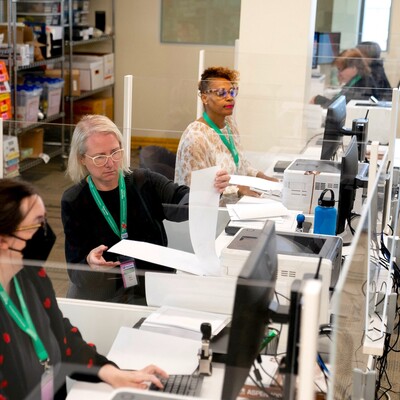 The Monitor's ViewThe renewed roots of election integrity
 Recounting cockpit struggle on FlyDubai flight, Israeli passengers return home
 Trump is moving fast and breaking things. He could pay in November.
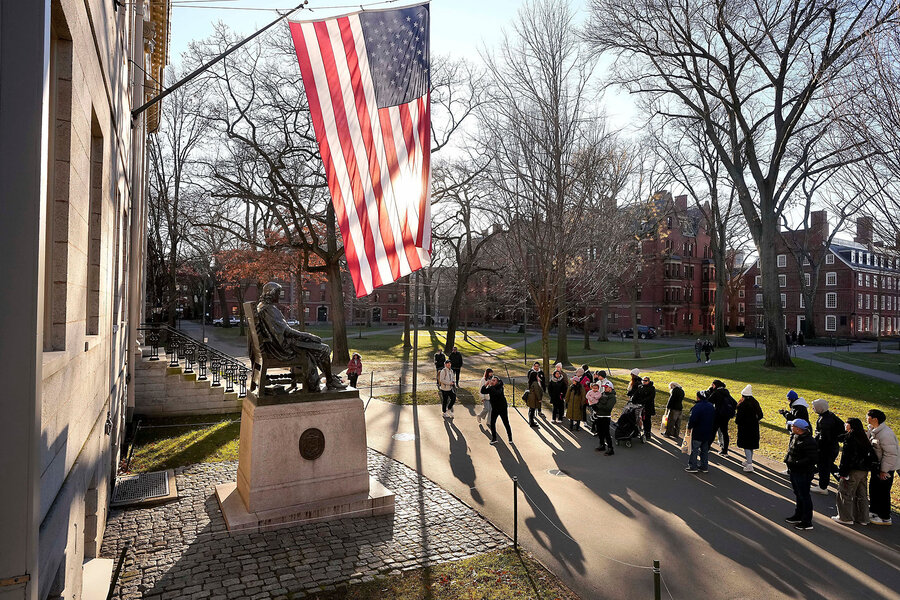 How colleges are responding to Trump administration’s ‘call to action’
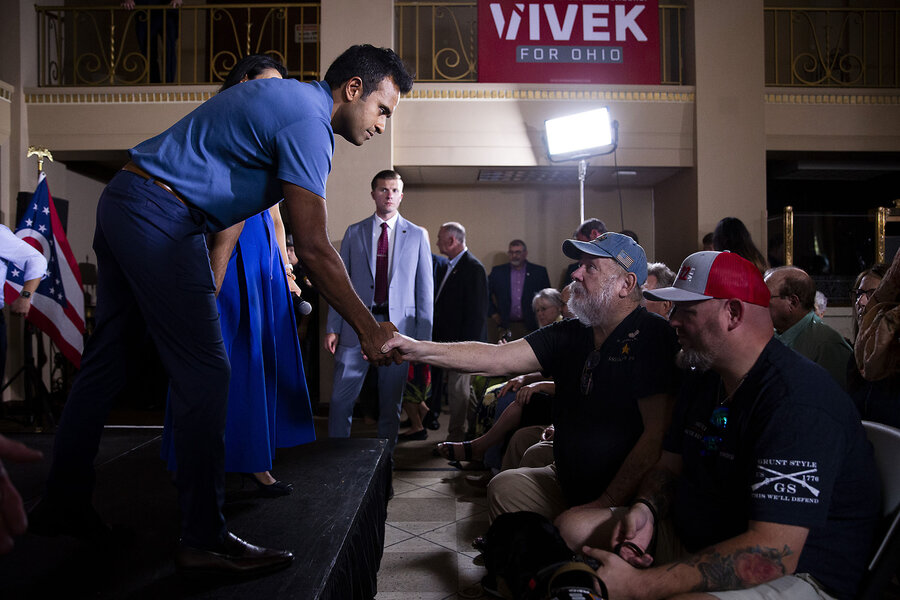 As MAGA turns toward ‘heritage Americans,’ Ramaswamy hopes it doesn’t leave him out
 Hoping to push the US away, Iran’s strategy is to go on the offensive
 The US wants a Ukraine peace deal. Here’s why Russia isn’t biting.