






Workers of the world, volunteer
More employees want workplaces in which they can donate their time for a greater good.
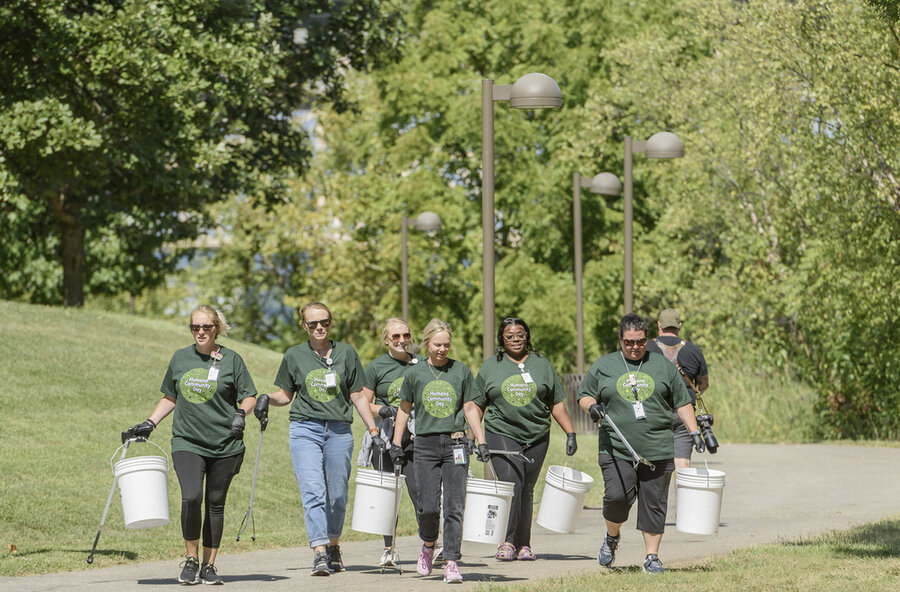
On this Labor Day weekend, many more Americans may take part in community service than they have in the past. Their generosity reflects a shift in the workplace as employees demand a greater commitment to the public good from the companies they work for. Younger workers in particular seek jobs that create both community and mission.
That trend reflects a global change. A Deloitte survey this year in 44 countries found that 86% of Generation Z and 89% of millennials prefer work that has a positive impact on society. Among American companies, “employee volunteering has soared in the past three years,” according to Benevity, a platform that develops workplace volunteer programs.
An increasing demand for careers that go beyond self-interest may have been caused by employee isolation during the COVID-19 pandemic and the resulting rise in remote work. Many younger workers started their careers on Zoom or in largely empty workplaces. Being generous with their time and talents is a way to find common purpose. And they expect companies to share their altruism.
Many are. Forty percent of Fortune 500 companies give grants to nonprofit organizations where their employees can volunteer, according to Double the Donation, which tracks corporate philanthropy. Roughly 60% give their employees paid time off to volunteer. A survey by Benevity found that 80% of companies seek or create opportunities for their employees to engage in “volunteer acts of kindness.”
The rapid growth of employee volunteer activities reverses a downward trend in volunteerism measured by the U.S. Census Bureau over the past decade. According to the latest Gallup index of global generosity, roughly 75% of adults volunteered their time or helped someone they didn’t know last year.
Deepen your worldview
with Monitor Highlights.
Politics with respect
Get political stories with respectful analysis.
There‘s a world of new ideas in every
Books newsletter.
There‘s more to life, enrich yours with
Culture & Learning weekly.
Follow humanity‘s discoveries with
Science & Nature stories in your inbox.
Gain a spiritual perspective
from the stories in your inbox.
Want to understand the deeper impact of critical events? Learn the Monitor‘s insight.
Already a subscriber? Log in to hide ads.
All that generosity counters depictions of a world fragmented by political bitterness and conflict. “You can read this morning’s newspaper and find out how much we distrust each other and indeed, you could almost say hate each other,” said Robert Putnam, an American political scientist, in a recent conversation with The Chronicle of Philanthropy. And yet, he observed, social connections are the evidence of “trust and reciprocity, togetherness.”
In simple acts of helping strangers this weekend, Americans can join a world of volunteers dissolving hate.
 The Monitor's ViewOne of Ukraine’s winning principles
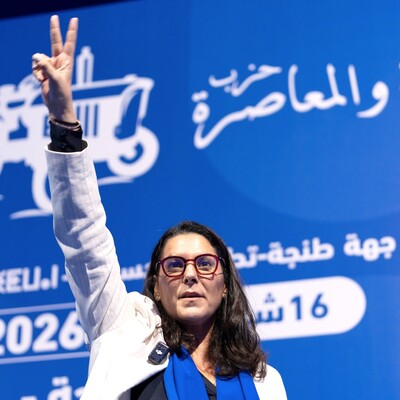 The Monitor's ViewMorocco welcomes women in leadership
 The Monitor's ViewWhen students rise up, integrity might prevail
 The Monitor's ViewInnovation’s secret sauce: Less fear, more forgiveness
 The Monitor's ViewThe Swiss take a stand on neutrality
 The Monitor's ViewThe renewed roots of election integrity
 Recounting cockpit struggle on FlyDubai flight, Israeli passengers return home
 Trump is moving fast and breaking things. He could pay in November.
 How colleges are responding to Trump administration’s ‘call to action’
 As MAGA turns toward ‘heritage Americans,’ Ramaswamy hopes it doesn’t leave him out
 Hoping to push the US away, Iran’s strategy is to go on the offensive
 The US wants a Ukraine peace deal. Here’s why Russia isn’t biting.