



Why resilience is the key to solving 21st century problems

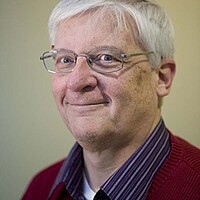
Resilience isn't something that Andrew Zolli just thinks about. It's something he's had to demonstrate in his own life.
In 2008 his close partner at PopTech, Tom LeVine, died suddenly. He and his wife lost a child in pregnancy. His mother suffered a serious illness.
"And then we had the global financial collapse. All at the same time," he recalls. "I've had rough times before, but I've never had anything that made me feel like I might run up against my ability to manage."
Mr. Zolli had been working on a book about resiliency. "I wrote this book at a time when it felt like it was raining hammers. I would show chapters of the galley to my wife who would say, 'You see what you said here in Chapter 3? Are you doing this? You need what you're writing about right now.' "
Zolli did pull through. Today he and his wife have two lovely children. He's still heading PopTech, which brings together a global community of innovators from many fields to share insights and work together to address world problems. And his book, "Resilience: Why Things Bounce Back," written with journalist Ann Marie Healy, was published this summer.
Resilience is the key to the world overcoming its severe economic and environmental challenges, Zolli says. It's what makes individuals, organizations, and cultures able to withstand hardships and recover.
A few years ago Zolli noticed "a new conversation" emerging among institutions such as the Rockefeller Foundation, the Bill & Melinda Gates Foundation, USAID, and the World Bank, "converging toward a conversation about ... how we build systems that can absorb disruption, because we're living in such a time of volatility," he says. He saw how the scientific study of resiliency, though still in its infancy, was already yielding useful insights.
PopTech, which holds a conference each fall in Camden, Maine, this year added an event in Iceland as well – for an important reason.
Iceland is "a fascinating laboratory for economic, social, and political resilience of many different stripes," Zolli said in a recent telephone interview. Its banks melted down in the financial crisis. But the country has taken decisive steps to bounce back, including writing a new constitution in just a few months time.
One happy conclusion of the book is that most people are resilient – often more resilient than they think. But can those who, for whatever reason, don't seem to possess that quality be helped? What makes individuals resilient? Ways to increase resiliency are becoming better understood, with two factors emerging, he says.
"If you believe that the world is a meaningful place, and you have a meaningful place within it; if you believe that you have agency within the world, that your actions have meaning ... that successes and failures are put in your life to teach you things, and that they're not just random acts of chance, then you have a much higher degree of resilience in the face of trauma," he says.
These mental attitudes are associated with religious beliefs. "People who have a spiritual or religious worldview are, on average, more resilient than people who aren't," he says. That's not the same as saying a particular religious belief – or any religious beliefs – are true. But "whether religion is true or not, it's actually good for you," he says.
The kind of "mindfulness" meditation associated with Buddhist monks has also proved useful in reducing stress. It can be used with combat veterans diagnosed with post-traumatic stress disorder. Today US troops are more likely to kill themselves after returning home than to have been killed by the enemy, Zolli says. "That's a byproduct of the fact that war has become less fatal but no less stressful." In teaching some form of "mindfulness" meditation to veterans "we're talking about not only saving dollars but saving lives."
Zolli's book is laced with examples of resilient institutions. None is any more remarkable than that of Hancock Bank. Hurricane Katrina damaged or destroyed 90 of the 103 branches of the Gulfport, Miss., based regional bank. Many of its customers had lost everything they had, including their IDs and checkbooks. The bank, recognizing that its prime responsibility was to serve its community (not to make a profit), authorized branches to begin giving out $200 to anyone who would sign their name (not just its customers), no ID required. In this way some $42 million was put in the hands of local residents (and pumped into the local economy) to help begin the recovery.
The move paid off for the bank. More than 99 percent of the money was paid back voluntarily. And the goodwill that was created helped deposits at the bank rise by $1.5 billion over the next three years.
"The world needs a lot more examples like this," Zolli says. "How do we establish rules that create more Hancocks over time?"
America celebrates businesses such as Google and Facebook who grow at fantastic speed, but forgets that a crash is often awaiting them somewhere down the line. "We forget that everything that goes up must come down," he says. "And the coming down is usually uglier."
Hancock represents a different model. "This kind of slower growth, deeply connected to community, this is the kind of stuff of which real resilience is made," he says.
PopTech now is taking on the question of how to build resiliency in the world, Zolli says. The world's problems, from economic disruptions to changing climate patterns, will demand resilience. "It's ultimately in our collective self-interest that we bolster the resilience of all of us."
• Sign up to receive a weekly selection of practical and inspiring Change Agent articles by clicking here.



